
Reports
-

Design of the BIONEXT co-creative arena
The report describes the methodology of the BIONEXT workshops.
-

Conceptual understanding of transformative change
The report dives into a question on what is the conceptual understanding of transformative change in the context of the biodiversity nexus
-

Biodiversity case studies indicating transformative change
We have collected biodiversity case studies that indicate transformative change
Publications
-

Transformative governance: Exploring theory of change and the role of the law
We assess how five governance approaches theorize change towards sustainability.
-

Transformative change from below? Linking biodiversity governance with the diversity of bottom-up action
This paper analyses biodiversity-focused practices across the civil, market and public spheres to identify the modes of intervention that actors when they seek to fight biodiversity loss.
-

Understanding the role of biodiversity in the climate, food, water, energy, transport and health nexus in Europe
A systematic review to understand how biodiversity is interconnected with climate, food, water, energy, transport and health.
-

Plurality in transformative change: Three pathways toward nature-positive Europe(s)
How can Europe become nature-positive by 2050? And what kinds of transformative change are needed to get there?
Other
-

Podcast | Visions for 2025
A podcast episode describing possible futures for 2050.
-

Fact sheet | BIONEXT in brief
A fact sheet summarizing BIONEXT’s key results from 2022 to April 2024.
-

Fact sheet | The biodiversity nexus
A fact seet summarizing the concept of biodiversity nexus (PDF).
-

Policy Brief 1 | Exploring Transformative Solutions for Biodiversity and Sustainability
BIONEXT’s first Policy Brief.
-

Open letter | The numbers game of nature in cities
Chrysi Laspidou’s Open letter on the role of nature in cities.
-

Policy Brief 2 | What policymakers need to learn from bottom-up biodiversity action
Reasons why policymakers need to stay attentive to bottom-up action.
-
Policy Brief 3 | Interlinkages between biodiversity, climate, food, water, energy, transport and health: A concentrated dose for policymakers
Our third policy brief clarifies the influence of biodiversity on other sectors of human life, providing essential evidence for coherent policies.
-
Policy Brief 4 | Exploring long-term biodiversity futures in Europe: Using the future to inform policy and decision making today
BIONEXT’s fourth policy brief highlights why tackling biodiversity requires looking beyond single sectors and embracing a systems view.
-

Zine | Composting Conflict
The BIONEXT project presents three European case studies that show: addressing injustice is often overlooked as a key component in accelerating transitions to a nature-positive society. To amplify the key messages of these case studies, we’re accompanying them with an eye-catching and brain-stimulating mini magazine that you can print and fold yourself.
-

Policy Brief 5 | Why policies relevant to biodiversity risk overlooking justice — and how to address it
Biodiversity transitions require fundamental changes across multiple sectors that interact with nature. In this brief, we focus on agriculture, forestry, and health as illustrative sectors with strong and distinct links to biodiversity, reflecting a broader nexus perspective.
-
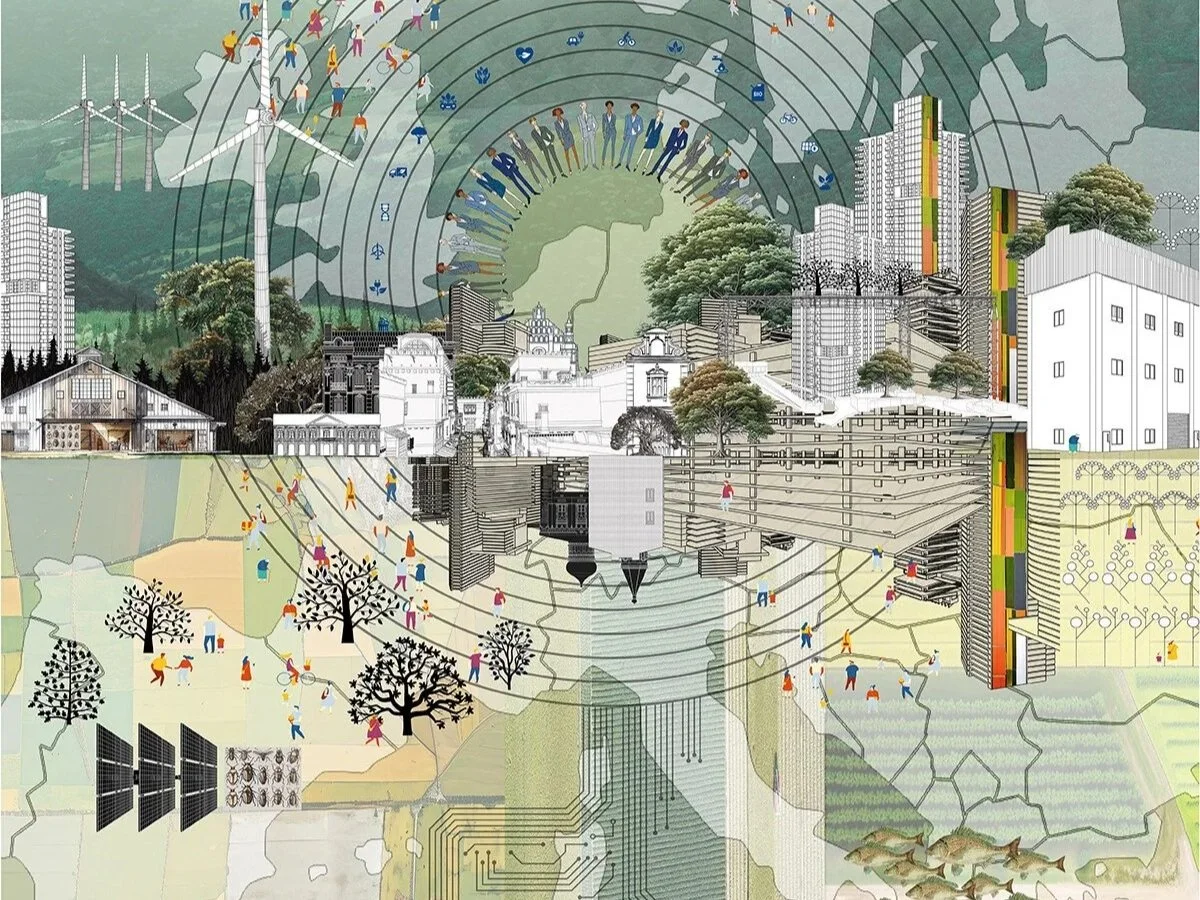
Pathway animations
These three videos are of a series of three future visions developed by the BIONEXT project. Together, the stories of Sam, Mo and Li present different pathways towards positive futures for biodiversity. They are not predictions or blueprints, but thought-provoking scenarios that encourage us to imagine what a nature-positive future could look like.
-
Policy Brief 6 | Enabling a Nature-Positive Europe: Pathways and Mechanisms of Transformative Change
BIONEXT Policy Brief sheds light on the mechanisms that serve as the building blocks of transformative pathways towards a nature-positive Europe. It highlights the key roles of governance, cross-sectoral integration and social equity in enabling long-term transformation.
-
Policy Brief 7 I Supporting environmental decision making through responsible AI-assisted Decision Analysis (AIDA)
Environmental decision-making requires balancing ecological, social and economic objectives while navigating uncertainty and competing interests. This BIONEXT Policy Brief introduces a tool that provides practical guidance for using generative AI responsibly to support transparent, evidence-informed environmental decision-making.
-
Policy Brief 8 | Driving Transformative Change for a Just and Sustainable Europe: Insights from Transdisciplinary Nexus Research
Biodiversity loss is driven by interconnected environmental, social, and economic factors that require solutions beyond traditional sectoral approaches. BIONEXT Guidance applies a nexus approach to help policymakers identify synergies and navigate trade-offs across sectors, supporting systemic change towards a nature-positive and sustainable Europe.
-
Policy Brief 9 | Delivering a Nature-Positive Europe: Insights from Biodiversity Nexus Modelling
Europe faces the interconnected challenges of biodiversity loss, climate change, water stress, food-system pressures and declining ecosystem resilience. This BIONEXT Policy Brief explores three pathways towards 2050 – Nature as Culture, Nature for Nature and Nature for Society – showing how different approaches can deliver nature-positive and socially just futures.
